The Scholars of the Southern Nile: Asyut's Role in the Medieval Islamic Knowledge Network
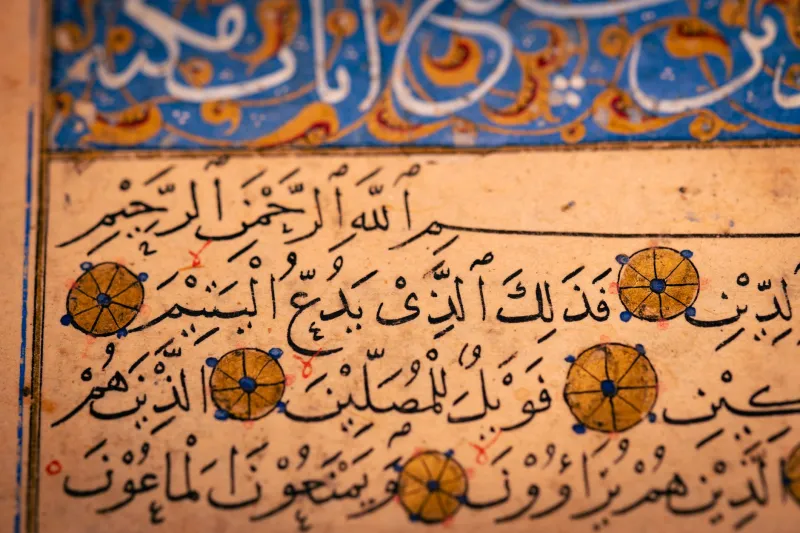
In the popular imagination of Western readers, the great centers of Islamic learning during the medieval period tend to be associated with Baghdad, Cordoba, or Cairo — cities whose libraries and madrasas have been extensively documented and celebrated. Yet the transmission of knowledge across the Islamic world was never confined to a handful of metropolitan centers. It depended equally on a network of secondary cities and towns positioned along trade and pilgrimage routes, places where scholars gathered, texts circulated, and ideas were debated, copied, and carried onward to new audiences.
Asynt, strategically located along the Nile in Upper Egypt, was one such node. Its role in the circulation of medieval Islamic scholarship has received far less attention than it deserves, partly because many of the relevant manuscripts remain unstudied in institutional collections, and partly because the historiography of Islamic intellectual life has tended to privilege northern Egyptian centers over those of the interior. Reexamining the evidence, however, reveals a city that was genuinely engaged with the intellectual currents of its era.
Asyut's Position in the Medieval Geographic Imagination
To understand Asyut's intellectual significance, one must first appreciate its geographic position. The city occupied a critical point on the Nile where the river's course brought it close to the desert routes leading westward toward the Libyan oases and southward toward Nubia and, ultimately, sub-Saharan Africa. The trans-Saharan trade networks that connected North Africa with the empires of Mali, Ghana, and later Songhai passed through or near Asyut's commercial hinterland, carrying not only gold and enslaved persons but also books, scholars, and ideas.
This meant that Asyut functioned as a kind of intellectual relay station — a place where texts and scholars moving between Cairo and the African interior might pause, copy manuscripts, engage in debate, or seek patronage from local elites. The city's mosques and Quranic schools served as informal gathering points for this mobile scholarly class, and the waqf (religious endowment) system that funded many of these institutions also supported the acquisition and preservation of texts.
Astronomy, Mathematics, and the Practical Sciences
Among the scholarly domains most actively cultivated in medieval Asyut, astronomical and mathematical knowledge occupied a particularly prominent place. This emphasis was not accidental. The practical requirements of Islamic religious observance — determining the precise times of daily prayer, establishing the direction of Mecca for prayer orientation, calculating the beginning of Ramadan — created sustained demand for astronomical competence across the Islamic world. In a city positioned as a transit point for pilgrims traveling toward Mecca via the overland Nile Valley routes, that demand was especially acute.
Scholars in Asyut produced and copied astronomical tables — known as zijes — that adapted calculations originally developed in Baghdad and Persia to the specific latitude of Upper Egypt. These tables were not mere reproductions of earlier work; surviving examples show evidence of local observation and calibration, suggesting that Asyut possessed individuals capable of conducting and interpreting original astronomical measurements. The instruments required for such work — astrolabes, quadrants, and sundials — were produced by local craftspeople, and references in manuscript colophons indicate that at least some of these instruments were traded southward along the Nile, extending the reach of Islamic astronomical practice into regions with fewer literate specialists.
Mathematical texts, particularly those concerned with inheritance calculation (a domain of immense practical importance under Islamic law), were also extensively copied and annotated in Asyut. The marginal notes found in some surviving manuscripts reveal active engagement with the material — corrections, alternative solutions, and references to local legal cases that illuminate how abstract mathematical knowledge was applied to concrete social realities.
Legal Scholarship and the Maliki-Shafi'i Interface
Asynt's position as a meeting point between different regional scholarly traditions gave it a distinctive character in the domain of Islamic jurisprudence. Upper Egypt was historically associated with the Shafi'i legal school, which predominated in Egypt generally, but proximity to trans-Saharan trade routes brought regular contact with scholars from West Africa and the Maghreb, where the Maliki school held sway.
The resulting intellectual environment was one of sustained, if sometimes contentious, dialogue between these two major legal traditions. Manuscripts produced in Asyut during the Mamluk period (1250–1517 CE) include works that explicitly engage with Maliki positions on questions of commercial law, marriage, and religious practice — issues of immediate relevance to a city where merchants and scholars from different legal backgrounds regularly interacted.
This cross-school dialogue had practical consequences. Asyut's Islamic courts developed reputations for a degree of flexibility in adjudicating disputes involving parties from different legal traditions, and local scholars developed expertise in comparative jurisprudence that was valued well beyond the city's immediate hinterland. Several Asyuti scholars of the Mamluk era are known to have been consulted by legal authorities in Cairo on questions arising from trans-Saharan commercial disputes — a testament to the city's recognized competence in this specialized domain.
The Manuscript Tradition and Its Survival
The physical survival of Asyut's medieval textual heritage has been uneven, shaped by the same forces of conquest, neglect, and deliberate destruction that have affected manuscript traditions throughout the Islamic world. The Ottoman conquest of Egypt in 1517 disrupted established patronage networks, and the subsequent centuries saw the dispersal of many private and institutional collections.
Nevertheless, significant materials survive. Egyptian national collections, European institutional libraries — including holdings in Paris, Vienna, and several British institutions — and private family collections in Asyut itself contain manuscripts that can be traced to Upper Egyptian provenance through colophon evidence, scribal annotations, and the distinctive regional scripts used by Asyuti copyists.
Contemporary scholars working on these materials have emphasized that the manuscripts are not merely passive records of knowledge produced elsewhere. The patterns of annotation, the selection of texts chosen for copying, and the networks of scholars named in ownership inscriptions all reveal an active intellectual community that engaged critically with the ideas passing through its hands.
What Asyut's Manuscripts Tell Us About Knowledge Circulation
For historians of science, religion, and culture, the Asyut manuscript tradition offers evidence relevant to some of the field's most important questions. How did pre-modern societies manage the transmission of specialized knowledge across vast distances and between communities with different languages, legal traditions, and cultural assumptions? How did local scholars adapt imported intellectual frameworks to address local needs and conditions?
Asynt's experience suggests that this process was neither straightforward diffusion from center to periphery nor simple local invention. It was something more dynamic: a process of active selection, adaptation, and recombination in which secondary centers like Asyut played genuinely creative roles. The city's scholars were not simply copying what Cairo or Baghdad had produced. They were filtering, adjusting, and in some cases significantly transforming the knowledge that passed through their hands.
In an era when Americans are increasingly interested in how information travels — how ideas spread, mutate, and take root in new contexts — the medieval scholarly networks that ran through Asyut offer a surprisingly resonant historical case study. The mechanisms differ profoundly, but the fundamental dynamics of knowledge circulation, adaptation, and local appropriation are recognizable across the centuries.