The Nile's Hidden Marketplace: Asyut's Centuries-Long Role as Egypt's Commercial Backbone
Long before container ships and interstate highways redefined the meaning of commerce, Asyut functioned as one of the ancient world's most consequential trading junctions. Situated at the crossroads of Nile Valley agriculture and trans-Saharan caravan networks, the city accumulated wealth and influence that modern economists would recognize immediately. Today, Asyut's commercial legacy continues to shape its position within Egypt's national economy in ways that rarely make international headlines.
A Geography Built for Trade
To understand why Asyut became an economic powerhouse, one must first appreciate its geography. Located roughly 235 miles south of Cairo along the western bank of the Nile, the city occupies a position that ancient merchants could not afford to ignore. The Nile itself served as the ancient world's equivalent of Interstate 95 — a high-volume, reliable corridor for moving goods north toward the Mediterranean and south into sub-Saharan Africa.
But Asyut offered something no other Nile city could replicate at the same scale: direct overland access to the Darb el-Arba'in, or the Forty Days Road. This legendary caravan route stretched southwestward through the Libyan Desert, connecting Asyut to the Darfur region of what is now Sudan. For centuries, caravans carrying gold, ivory, enslaved people, ostrich feathers, and exotic animals terminated their exhausting desert crossing right here, transforming the city into a receiving dock for the continent's interior wealth.
Think of Asyut's historical function the way an American might think of Kansas City — a landlocked hub that became indispensable precisely because multiple major arteries converged there, making it impossible to route commerce around it.
Pharaonic Foundations of a Market Economy
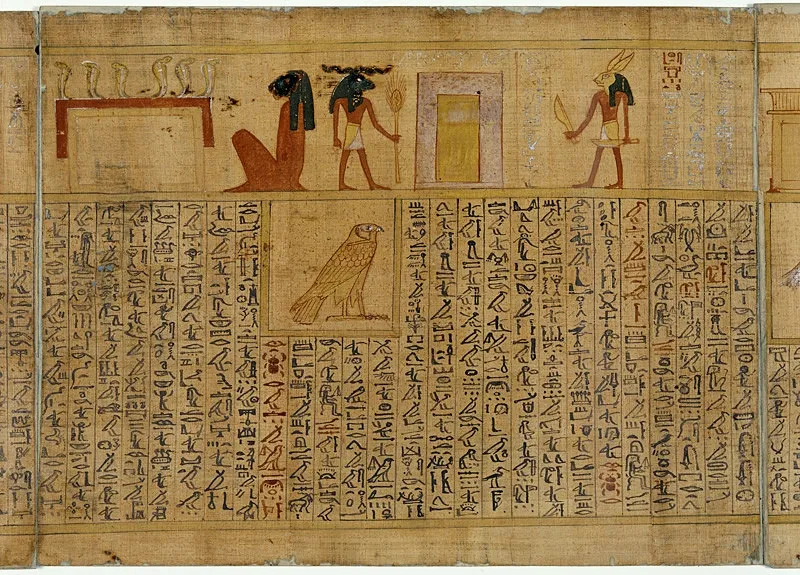
Archaeological and textual evidence confirms that Asyut's commercial significance predates even the Middle Kingdom period of ancient Egypt (roughly 2055–1650 BCE). The city, known in antiquity as Syut or Lykopolis to the Greeks, served as the capital of the thirteenth nome, or administrative province, of Upper Egypt. This administrative status was not incidental — it reflected the Egyptian state's recognition that controlling Asyut meant controlling the flow of goods between the Nile corridor and the desert interior.
Local nomarchs, the regional governors who wielded extraordinary power during the First Intermediate Period (approximately 2181–2055 BCE), accumulated personal fortunes that rivaled those of the pharaohs themselves. Their elaborate tomb complexes, carved into the cliffs north of the modern city, contain inscriptions boasting of grain stores, livestock herds, and trade revenues. These were not merely ceremonial claims. They documented a functioning regional economy in which Asyut operated as both a production center and a redistribution point.
Grain was perhaps the most critical commodity. The agricultural land surrounding Asyut, nourished by annual Nile floods, produced surpluses that could be stored, taxed, and traded. Ancient administrators understood what modern supply chain analysts call inventory buffering — the strategic accumulation of goods to smooth out scarcity during lean years. Asyut's granaries performed exactly this function for Upper Egypt.
The Medieval Apex: When Caravans Made Merchants Rich
If the pharaonic period established Asyut's commercial infrastructure, the medieval Islamic era transformed it into a genuinely cosmopolitan marketplace. Between roughly the ninth and nineteenth centuries CE, the city served as the primary terminus for the trans-Saharan slave trade, a brutal commerce that also carried legal goods including gold dust, natron, gum arabic, and livestock.
European and Arab travelers who passed through Asyut during this period recorded their astonishment at the city's markets. Ibn Battuta, the fourteenth-century Moroccan explorer whose travel accounts remain among the most valuable historical sources for the medieval Islamic world, documented the vitality of Egyptian trade networks that fed directly into Asyut's commercial ecosystem.
The caravans that arrived via the Forty Days Road could number in the thousands of camels, each animal carrying loads of goods that would be auctioned, taxed, and redistributed within Asyut's market districts. Local merchants accumulated capital that funded construction, scholarship, and further commercial ventures. The city's souqs — the covered markets that remain a feature of its urban landscape today — trace their origins to this period of extraordinary mercantile activity.
Industrialization and the Shifting of Commercial Gravity
The nineteenth century introduced forces that would fundamentally alter Asyut's economic position. Muhammad Ali Pasha's modernization program, which began reshaping Egypt after 1805, prioritized Cairo and Alexandria as the nodes of a new, European-oriented economy. The construction of the Ibrahimiyya Canal, which drew water from the Nile near Asyut to irrigate vast agricultural territories to the north, demonstrated the city's continued hydraulic importance even as its role as a caravan terminus diminished.
The opening of the Asyut Barrage in 1902 — one of the great civil engineering achievements of the early twentieth century — cemented the city's centrality to Egyptian irrigation infrastructure. The barrage regulated Nile water distribution across a massive agricultural hinterland, effectively making Asyut the control valve for Upper Egypt's farming economy. American engineers and investors familiar with the role of the Hoover Dam in managing Colorado River resources might find an instructive parallel here.
Cotton cultivation, which exploded across Egypt during the American Civil War as global markets sought alternatives to disrupted Southern supplies, brought new commercial energy to the Asyut region. Local merchants and landowners who pivoted to cotton production found themselves connected to Liverpool commodity markets and New York trading houses in ways their caravan-era predecessors could never have imagined.
Asyut in the Modern Egyptian Economy
Today, Asyut governorate ranks among Egypt's most populous, with estimates placing the regional population above four million. The city functions as the commercial and administrative capital of Upper Egypt, hosting banks, universities, hospitals, and industrial facilities that serve a vast rural hinterland.
Agriculture remains foundational. Sugar cane, cotton, wheat, and vegetables flow out of the Asyut region toward processing facilities and urban markets. The Asyut Sugar Company operates one of Egypt's significant sugar refining operations, connecting local farmers to national food supply chains in a manner that echoes the grain redistribution role the city played in antiquity.
Small-scale manufacturing and craft production — including the renowned Asyut metalwork and textile industries covered elsewhere on this site — contribute meaningfully to local employment and export revenues. Informal market networks, which economists studying developing economies have increasingly recognized as sophisticated adaptive systems rather than primitive holdovers, continue to operate with considerable efficiency in the city's commercial districts.
Infrastructure investment has accelerated in recent years. Road upgrades, rail connectivity improvements, and expansions to Asyut University's technical programs signal the Egyptian government's recognition that Upper Egypt's development depends significantly on Asyut's capacity to function as a regional economic engine.
An Overlooked Lesson for Global Commerce
American readers steeped in discussions of supply chain resilience — a topic that gained enormous public attention following the disruptions of 2020 and 2021 — may find Asyut's history unexpectedly instructive. The city's endurance as a commercial hub across multiple millennia, through regime changes, technological disruptions, and shifting trade geographies, reflects a fundamental principle: strategic location, combined with adaptive local capacity, creates economic durability that outlasts any single commodity or political arrangement.
Asynt did not survive as a commercial center because it exported one thing well. It survived because it sat at a junction that the world consistently needed, and because its inhabitants consistently found ways to add value to whatever flowed through it. That is a lesson with no expiration date.