Words from the Ancient World: What Asyut's Remarkable Papyrus Discoveries Tell Us About Everyday Egyptian Life
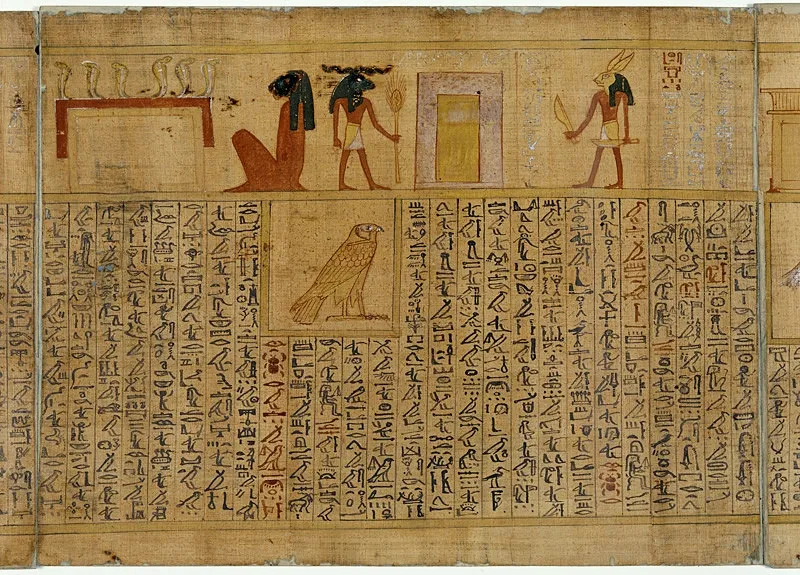
Photo: Anonymous (Egypt)Unknown author, Public domain, via Wikimedia Commons
Among the most significant — and least publicized — archaeological achievements of the past two centuries is the recovery of thousands of ancient texts from the Asyut region of Upper Egypt. These manuscripts, ranging from legal contracts and personal letters to religious hymns and medical prescriptions, constitute a window into ancient Egyptian society that no tomb painting or temple inscription can fully replicate. What they reveal about how ordinary people lived, worshipped, argued, and loved continues to reshape scholarly understanding of one of history's most captivating civilizations.
The Discovery Context: Why Asyut Preserved So Much
Papyrus, the writing material manufactured from the pith of the Cyperus papyrus plant, is fragile under most environmental conditions. Moisture, insects, and simple physical handling degrade it rapidly. The reason Asyut's textual record survived in such remarkable volume is partly geological and partly cultural.
The limestone cliffs that flank the Nile valley near Asyut contain hundreds of rock-cut tombs, some dating back more than four thousand years. These sealed, dry chambers provided nearly ideal preservation conditions. Ancient Egyptians also buried texts intentionally — placing religious manuscripts with the deceased, archiving administrative records in dedicated storage chambers, and sometimes concealing valuable documents during periods of political instability.
The Asyut region's importance as an administrative capital throughout multiple historical periods meant that significant quantities of official and private documentation accumulated here over millennia. When archaeologists, antiquities dealers, and — regrettably — unregulated diggers began disturbing these sites in the nineteenth and early twentieth centuries, the sheer volume of recovered material was staggering.
The Coffin Texts: Religion Written for the Individual
Among the most intellectually significant textual discoveries associated with Asyut are examples of what Egyptologists call the Coffin Texts — a collection of religious spells and instructions inscribed on the interior surfaces of wooden coffins during the Middle Kingdom period, roughly 2055 to 1650 BCE.
Unlike the earlier Pyramid Texts, which were carved exclusively into royal burial chambers and reserved for the spiritual benefit of pharaohs, the Coffin Texts represent a democratization of religious aspiration. Wealthy non-royal Egyptians — merchants, administrators, military officers — could now commission these protective spells for their own afterlife journeys. Asyut's coffins, several of which are now held in major museum collections including the Egyptian Museum in Cairo and institutions in Europe, contain some of the finest and most complete examples of this corpus.
For American audiences accustomed to thinking about ancient Egypt primarily through the lens of pharaonic spectacle — pyramids, golden masks, imperial conquest — the Coffin Texts offer a corrective perspective. They reveal a society in which ordinary successful people worried about the same fundamental questions that animate religious practice today: What happens after death? How does one achieve a good outcome in the afterlife? What obligations do the living owe the dead?
The spells themselves are elaborate, poetic, and sometimes surprisingly intimate. They describe the deceased navigating a complex underworld landscape, identifying themselves to divine gatekeepers, and asserting their moral worthiness. Reading them, one encounters not abstract theology but the specific anxieties of individual human beings who happened to live four thousand years ago.
Administrative Papyri: The Bureaucracy of Ancient Life
Beyond the religious manuscripts, Asyut has yielded substantial quantities of administrative and legal texts that illuminate the mechanics of daily existence in ancient Egypt with remarkable specificity. These documents — inventories, land transfer agreements, court records, tax receipts, and labor contracts — constitute what historians sometimes call the "bottom layer" of the historical record: evidence not of what rulers proclaimed but of what ordinary people actually did.
Property disputes appear frequently in the Asyut legal papyri. Families argued over inheritance, neighbors contested field boundaries, and creditors pursued debtors through formal legal channels. The procedures documented in these texts reveal a surprisingly sophisticated legal culture. Ancient Egyptians could submit written complaints, call witnesses, appeal unfavorable decisions, and in some cases access female legal standing that would not be matched in many Western legal systems until the nineteenth or twentieth century CE.
Labor contracts from the region detail the terms under which skilled workers — carpenters, weavers, potters, scribes — agreed to provide services. Wage rates, working hours, and payment modalities were specified in writing, suggesting a commercial culture that valued contractual clarity. An American small business owner reading a translation of one of these documents might be struck by how familiar the underlying concerns appear: both parties wanted to know exactly what was being exchanged and what recourse existed if the agreement broke down.
Personal Letters: Voices Across the Millennia
Perhaps the most emotionally affecting category of Asyut's textual heritage consists of personal correspondence. Papyrus letters, many of them written in the Demotic script that evolved during the later pharaonic period, preserve the voices of individuals who had no expectation that their words would survive, let alone be read by scholars in the twenty-first century.
These letters discuss family health, agricultural anxieties, requests for money, complaints about unreliable relatives, and expressions of affection that transcend their historical distance. One recurring genre, known to Egyptologists as "letters to the dead," involved the living writing directly to deceased family members to request their supernatural intervention in ongoing disputes or personal difficulties. These texts, which blend grief, practicality, and spiritual belief in a manner that feels distinctly human, have been found in contexts associated with the Asyut region.
The letters also document commercial networks that extended well beyond the immediate locality. References to goods sent from distant cities, agents operating in multiple locations, and commodity prices fluctuating with supply conditions paint a picture of economic life that was considerably more interconnected than popular imagination typically allows.
The Role of Modern Scholarship
Deciphering and contextualizing these texts requires extraordinary interdisciplinary effort. Egyptologists, linguists, historians, archaeologists, and conservation scientists collaborate to extract meaning from manuscripts that may be fragmentary, water-damaged, or written in scripts that only a handful of living specialists can read fluently.
Institutions including the Oriental Institute at the University of Chicago, the Metropolitan Museum of Art in New York, and numerous European universities have contributed significantly to the scholarly analysis of Asyut-associated texts. Digital imaging technologies, including multispectral photography that can reveal ink invisible to the naked eye, have opened new avenues of discovery even in manuscripts that appeared fully analyzed decades ago.
The ongoing challenge of provenance — determining exactly where specific manuscripts were found and under what circumstances — complicates the scholarly picture. Many Asyut papyri entered museum collections through the antiquities market rather than controlled excavations, meaning that contextual information which would help interpret their contents has been permanently lost. This reality has strengthened international consensus around the importance of regulated archaeological practice and has prompted renewed conversations about repatriation of culturally significant objects.
What the Texts Mean for How We Understand Egypt
The cumulative significance of Asyut's manuscript heritage extends well beyond academic Egyptology. These texts demonstrate that ancient Egyptian civilization was not a monolithic, static entity defined exclusively by its royal monuments. It was a living, arguing, trading, grieving, aspiring human society in which individuals navigated complex institutions, held strong personal opinions, and left written records of their passage through the world.
For American readers whose engagement with ancient Egypt often begins and ends with museum blockbuster exhibitions, the Asyut manuscripts offer an invitation to a deeper encounter. The pyramids tell us what pharaohs wanted posterity to believe about them. The papyri from Asyut tell us something far more intimate and ultimately more universal: what it felt like to be alive in a world that was, in its essential human dimensions, not so different from our own.