Bending the Nile to Human Will: Asyut's Legacy of Water Engineering Across the Ages
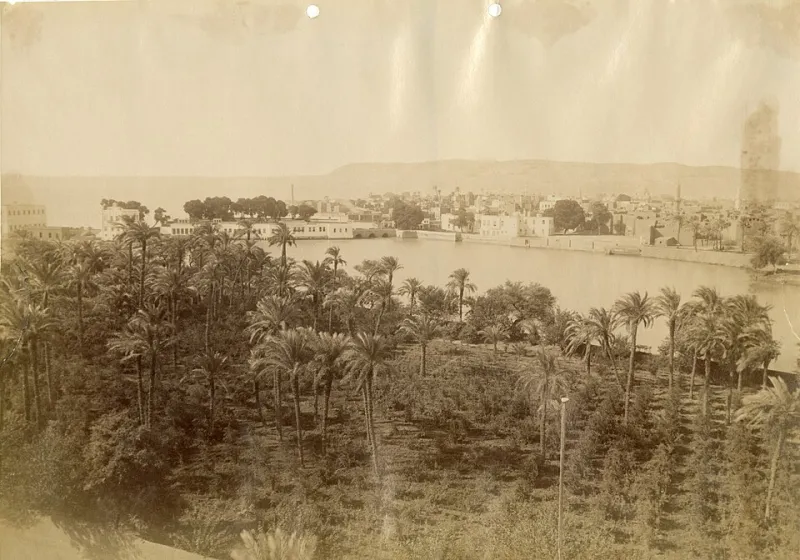
The Nile has always been Egypt's lifeline, but the river does not yield its gifts without negotiation. Along its Middle Egyptian stretch, the city of Asyut has served for millennia as a principal site of that negotiation — a place where human ingenuity met the river's unpredictable rhythms and, over time, gradually prevailed. The engineering legacy embedded in Asyut's landscape is as layered as the sediment the Nile deposits each season, and it speaks volumes about how a civilization can be built, sustained, and ultimately transformed through the mastery of water.
Ancient Foundations: Canals Before Concrete
Long before modern machinery arrived on the scene, Asyut's earliest inhabitants recognized that the Nile's annual inundation — the flood cycle that ancient Egyptians called Akhet — was both a blessing and a constraint. Floodwaters enriched the soil with nutrients, making agriculture possible in an otherwise arid environment. But without deliberate management, those same waters could destroy crops, displace communities, and create periods of devastating scarcity when the floods arrived too early, too late, or not at all.
Archaeological evidence suggests that canal-building activity in the Asyut region dates to at least the Middle Kingdom period (circa 2055–1650 BCE). Administrators of the nome — the administrative district centered on Asyut, then known as Lycopolis — oversaw the construction of lateral canals designed to capture floodwater and direct it toward agricultural fields that lay beyond the immediate reach of the river. These earthen channels were not passive conduits; they required constant maintenance, seasonal dredging, and coordinated labor organized at a governmental level.
The Bahr Yusuf, a natural channel that branches westward from the Nile near Asyut and eventually feeds the Faiyum Depression, deserves particular attention. Though its origins are partly natural, human hands shaped and extended this waterway over centuries, effectively creating an arterial system that carried Nile water deep into Egypt's western hinterlands. The channel's name — Arabic for "Joseph's River" — reflects later Islamic-era traditions attributing its construction to the biblical Joseph, though its actual history is far older and more complex.
The Ottoman and Khedival Eras: Ambition Grows
By the time Egypt entered the Ottoman period in the sixteenth century, Asyut's position as a regional capital had reinforced its importance as a node of irrigation administration. Tax records and administrative correspondence from this era reveal ongoing investment in canal maintenance, reflecting the economic reality that agricultural productivity — and thus revenue — depended entirely on water access.
The most transformative period, however, arrived in the nineteenth century under the modernizing campaigns of Muhammad Ali Pasha and his successors. Egypt's rulers, eager to expand cotton production for export to European textile markets (including those in the American South, which were disrupted by the Civil War), invested heavily in perennial irrigation — a system that, unlike the older basin irrigation model, allowed fields to be watered year-round rather than only during the flood season. This shift placed enormous new demands on water infrastructure throughout Upper Egypt, and Asyut found itself at the center of planning discussions.
Engineers surveying the Nile in the latter half of the nineteenth century identified the Asyut reach as a strategically critical point: the river's gradient and channel characteristics made it an ideal location for a control structure that could regulate water flow southward into the canal network.
The Asyut Barrage: Colonial Engineering, Enduring Impact
Construction of the Asyut Barrage — known in Arabic as Qantarat Asyut — began in 1898 under British colonial oversight, with the structure becoming operational in 1902, the same year as the original Aswan Dam further upstream. Designed by British engineers working within the framework of Egypt's then-colonial administration, the barrage stretches across the Nile with a series of sluice gates engineered to raise the river's water level upstream, thereby ensuring sufficient head pressure to push water into the Ibrahimiya Canal, the primary irrigation artery serving Middle Egypt.
At the time of its completion, the Asyut Barrage was considered a landmark achievement in hydraulic engineering. It enabled reliable irrigation across roughly 1.3 million acres of agricultural land in Middle Egypt — a transformation that reshaped the region's economy, increased crop yields, and made multi-season farming a practical reality for hundreds of thousands of Egyptian farmers.
The barrage also had significant unintended consequences. Perennial irrigation, while productive, altered the ecological balance of the Nile floodplain, contributing to soil salinization in some areas and changing the distribution of waterborne diseases such as schistosomiasis, which thrives in slow-moving irrigation canals. These tradeoffs echo challenges familiar to American water managers in regions like the Colorado River Basin, where large-scale water infrastructure has generated both economic benefit and long-term ecological complexity.
Rehabilitation and the Twenty-First Century
By the late twentieth century, the original Asyut Barrage — more than a hundred years old — had begun to show its age. Structural assessments identified significant deterioration in the foundation and gate mechanisms, raising concerns about both operational reliability and dam safety. In response, Egyptian authorities, with support from international development partners, undertook a comprehensive rehabilitation project that culminated in the construction of a new Asyut Low Dam adjacent to the original structure, completed in stages between 2009 and 2017.
The new facility incorporates modern materials, updated sluice gate technology, and — significantly — a small hydroelectric power generation component, reflecting Egypt's broader ambitions to extract multiple forms of value from its Nile infrastructure. The rehabilitation project also included environmental mitigation measures and provisions for fish passage, acknowledging ecological concerns that would have been largely absent from the original 1898 design brief.
Water Engineering as Living History
For American visitors or researchers approaching Asyut's story, the region's hydraulic heritage offers a compelling parallel to infrastructure narratives closer to home. The Tennessee Valley Authority's Depression-era dam-building campaigns, the Bureau of Reclamation's transformation of the American West, and ongoing debates about aging dam infrastructure in states from California to Pennsylvania all echo, in different registers, the questions Asyut's engineers and administrators have grappled with across the centuries.
What distinguishes Asyut's story is its sheer temporal depth. The same stretch of river that ancient Egyptian administrators managed with earthen berms and hand-dug canals is today regulated by reinforced concrete and electronically monitored sluice gates. The engineering tools have changed beyond recognition; the fundamental challenge — how to distribute a finite and variable water supply across a population whose needs are anything but finite — has not.
Asynut's position in this long story is not incidental. It reflects geography, political history, and the accumulated wisdom of communities that have lived beside, and depended upon, one of the world's great rivers for longer than most nations have existed. That legacy, written in stone, concrete, and flowing water, remains one of the region's most enduring contributions to human civilization.