A Region Under Scrutiny: Asyut, Political Violence, and the Long Road Toward Stability in Modern Egypt
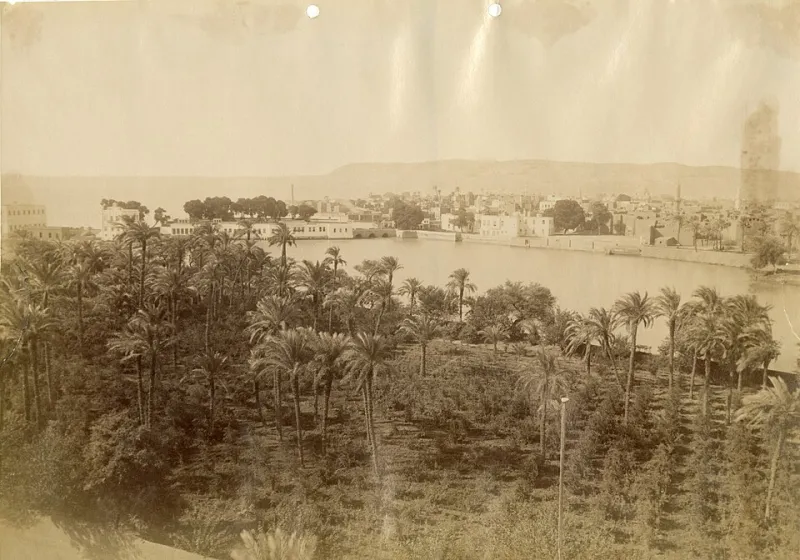
Photo: Antonio Beato, CC0, via Wikimedia Commons
To understand modern Egypt's struggle with political violence and religious extremism, one must reckon seriously with Asyut. For much of the late twentieth century, this ancient city in Upper Egypt occupied a painful position at the center of the country's most urgent internal conflicts. The events that unfolded there — and the broader regional context from which they emerged — left a mark on Egyptian society, policy, and national identity that scholars, journalists, and policymakers continue to analyze today.
This article does not sensationalize those events. Rather, it attempts to provide American readers with the historical grounding necessary to understand why Asyut became what it became, and what its experience reveals about the broader challenges facing Egypt and, by extension, the wider Middle East.
Historical Roots of Social Tension
Anyut's modern difficulties did not emerge from a vacuum. The city and its surrounding governorate entered the twentieth century carrying deep structural inequalities — in land distribution, educational access, and economic opportunity — that the post-revolutionary Egyptian state, established after the 1952 coup that ended the monarchy, only partially addressed.
Asynut Governorate has historically been home to one of Egypt's largest Coptic Christian communities, and the region's social fabric has long been defined by the coexistence — sometimes harmonious, sometimes strained — of Muslim and Christian populations. Demographic pressures, competition over land and resources, and periodic episodes of intercommunal friction created a backdrop of underlying tension that outside political forces would later seek to exploit.
The rapid urbanization of the 1960s and 1970s brought new pressures. Young men migrating from rural villages to Asyut city found an urban environment that could not absorb them economically. Unemployment, overcrowding, and a pervasive sense of social exclusion created conditions that historians of political violence recognize as broadly conducive to radicalization — not because poverty automatically produces extremism, but because hopelessness, when combined with a compelling ideological narrative of grievance and redemption, can become a powerful mobilizing force.
The Rise of Islamist Militancy in Upper Egypt
During the 1970s, Egypt's universities became incubators for a new generation of Islamist political movements. President Anwar Sadat, seeking to counter leftist influence on campuses, initially tolerated and even encouraged the growth of student Islamic associations. That strategy ultimately backfired. By the late 1970s and early 1980s, more radical factions had splintered from mainstream Islamist organizations, embracing violence as a political instrument.
Asynut became a particular stronghold for al-Gama'a al-Islamiyya (the Islamic Group), one of the most significant militant organizations to emerge from this period. The group drew heavily on recruits from Upper Egypt, including Asyut, and its ideology — which rejected the legitimacy of the Egyptian state and called for the establishment of an Islamic government — found receptive audiences among segments of the city's economically marginalized youth.
In October 1981, following the assassination of President Sadat by members of a related militant cell, members of al-Gama'a al-Islamiyya launched an armed uprising in Asyut, attacking police stations and government buildings. Egyptian security forces suppressed the uprising within days, but the violence — which resulted in dozens of deaths among both security personnel and civilians — signaled that Asyut had become a frontline in Egypt's internal conflict. The Egyptian government responded with mass arrests, security crackdowns, and prolonged states of emergency that fundamentally altered daily life in the governorate.
A Decade of Insurgency
The 1980s and early 1990s brought sustained low-level insurgency to Upper Egypt, with Asyut at its epicenter. Attacks on police, government officials, tourists, and members of the Coptic Christian community occurred with troubling regularity. The Egyptian state's response combined aggressive security operations with limited economic development initiatives — a combination that critics argued was weighted too heavily toward coercion and insufficiently toward addressing underlying grievances.
International attention sharpened dramatically in November 1997, when members of al-Gama'a al-Islamiyya carried out a massacre at the Temple of Hatshepsut near Luxor, killing 62 people, the majority of them foreign tourists. While Luxor — not Asyut — was the site of that attack, the perpetrators had organizational roots stretching through Upper Egypt, and Asyut's name featured prominently in subsequent investigations and media coverage. The Luxor massacre proved to be a strategic miscalculation of catastrophic proportions for the militant movement: the killing of tourists devastated Egypt's tourism economy, alienated much of the Egyptian public, and accelerated a crisis of legitimacy within al-Gama'a al-Islamiyya itself.
In the aftermath of Luxor, imprisoned leaders of the organization — including figures with direct ties to Asyut — issued a series of statements renouncing violence. This "initiative for ceasing violence," as it became known, was not universally accepted within the movement, but it marked a significant turning point. The insurgency in Upper Egypt effectively collapsed in the late 1990s, a result of both security pressure and internal ideological recalculation.
Sectarian Tensions and the Coptic Experience
No account of Asyut's modern history can omit the experience of its Coptic Christian community during these years. Copts in the governorate faced targeted violence from extremist elements who viewed them as symbols of a non-Islamic presence in Egyptian society. Churches were attacked, businesses were destroyed, and individuals were killed. The psychological toll on a community with roots in the region stretching back to the earliest centuries of Christianity was immense.
The Egyptian state's protection of Coptic communities during this period was, by many accounts, inconsistent. Human rights organizations documented cases in which security forces failed to respond adequately to attacks on Christian communities, and the legal framework governing the construction and repair of churches remained discriminatory well into the twenty-first century. These failures complicated the government's narrative of itself as a neutral protector of all Egyptians regardless of faith.
At the same time, it is important to note — as many Egyptian commentators have emphasized — that the overwhelming majority of Asyut's Muslim population neither participated in nor endorsed violence against their Coptic neighbors. The extremist fringe that carried out attacks represented a small, if destructive, minority, and many instances of ordinary Muslims protecting or supporting Christian neighbors during periods of tension have been documented.
Toward Reconciliation and a Cautious Present
In the years since the late 1990s, Asyut has undergone a gradual, incomplete, but real transformation. Economic development projects, improved infrastructure, and sustained security operations reduced the visible presence of organized militancy. Interfaith dialogue initiatives — some government-sponsored, others emerging organically from civil society — have worked to rebuild trust between communities.
The political upheavals of the Arab Spring period (2011–2013) introduced new uncertainties, and the rise and fall of the Muslim Brotherhood's brief hold on Egyptian national power reverberated through Upper Egypt in complex ways. Asyut's political landscape during those years reflected the broader national struggle over Egypt's identity and direction.
For American readers, Asyut's experience offers a case study in the interplay between economic marginalization, political repression, religious identity, and political violence — a set of dynamics that has shaped conflicts well beyond Egypt's borders. It also offers a reminder that communities defined by outsiders primarily through the lens of violence often contain within themselves the most determined advocates for peace, coexistence, and renewal. Asyut is, in this respect, a more complicated and ultimately more hopeful place than its most turbulent decades might suggest.