Beyond the Cairo Textbook: Why Asyut's Arabic Belongs in the Classroom
Photo: Press Information Department, Public domain, via Wikimedia Commons
The Textbook Problem
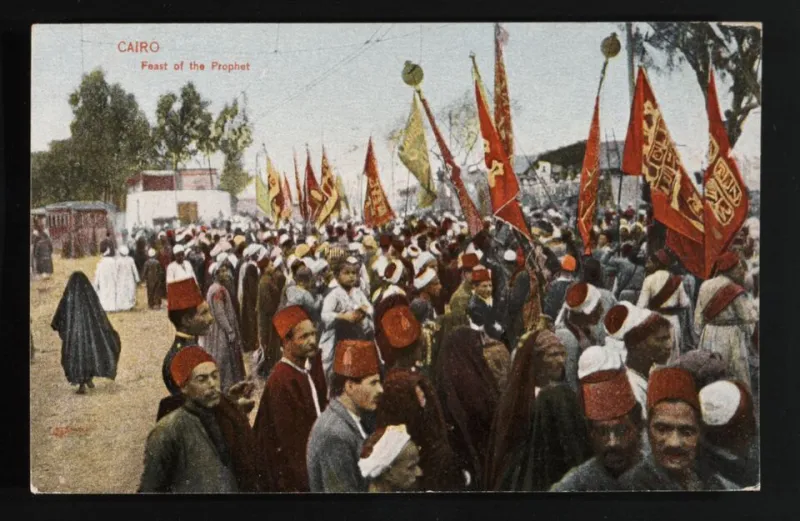
Walk into a typical American Arabic classroom and you will likely meet two versions of the language: Modern Standard Arabic for reading and formal writing, and Cairene Egyptian Arabic for conversation. That pairing is useful, but it is not the whole map. It leaves out Upper Egypt, the long stretch of the Nile valley where Asyut sits, and where millions of people speak in ways that textbooks rarely record.
This is not a small omission. Language classrooms shape what learners imagine Egypt to be. When every dialogue is set in Cairo, students absorb a quiet message: the capital is the default, and everywhere else is a regional variation. Asyut's speech challenges that assumption. It belongs to the Sa'idi continuum of Upper Egyptian Arabic, and it carries its own history, vocabulary, and oral style.
What Makes Asyut's Speech Distinct
No dialect is a single fixed object. Asyut's speech varies by generation, education, neighborhood, and setting. A professor, a farmer, and a teenager may sound different even when using the same words. Still, there are recognizable features that distinguish Upper Egyptian Arabic from the Cairene norm.
Pronunciation is one. The letter qāf, for example, surfaces in different ways across Egypt. In many Upper Egyptian communities it may be realized differently than in Cairo, and the difference can signal region and identity. Vowel length and stress also give Upper Egyptian speech a distinct rhythm. Textbooks often flatten these details because they are hard to print on a page.
Vocabulary is another. Local terms for irrigation, agriculture, kinship, and hospitality often have no exact equivalent in a Cairo-based textbook. A learner who knows only the standard phrase for 'How are you?' may still miss the warmer, more local forms used in a village or a family gathering. The same is true for proverbs. Upper Egyptian storytelling often relies on short, memorable sayings that carry social judgment and humor.
Why Diaspora Learners Benefit
For Egyptian Americans with family roots in Asyut and Upper Egypt, the classroom gap can feel personal. A student may study Arabic for years and still struggle to follow a grandmother's stories or a relative's jokes. That is not a failure of intelligence. It is a failure of materials.
Including Upper Egyptian Arabic does not mean abandoning Modern Standard Arabic. It means teaching register and range. A learner can use standard Arabic for the news, Cairene forms for broad Egyptian media, and Asyuti forms for family and local life. That flexibility is a skill, not a compromise.
There is also a practical benefit for professionals. Doctors, social workers, aid workers, and interpreters who serve Upper Egyptian communities in the United States may encounter patients and clients who speak a regional variety. Misunderstanding a word or a tone can have real consequences. Better training builds trust.
How to Teach It Responsibly
The first rule is simple: do not treat Upper Egyptian Arabic as broken Cairo Arabic. It is not a mistake. It is a regional variety with its own rules and prestige. Teachers should present it alongside other Egyptian varieties, not as a novelty or a punchline.
The second rule is to use real voices. Recordings of Asyuti speakers talking about food, farming, family, and local history are more valuable than invented textbook dialogues. Community members can serve as language partners. Local radio, oral history projects, and Egyptian films set outside Cairo can supply listening material.
The third rule is to teach comparison. Students should notice how a Cairo speaker and an Asyut speaker might say the same thing differently, and why. That kind of contrast builds metalinguistic awareness. It also prevents the idea that one variety is correct and the other is merely colorful.
A Wider Map of Egypt
In 2026, Arabic programs in the United States have good reason to rethink their maps. Egypt is not a single linguistic stage. It is a country of regions, each with its own voice. Asyut's Arabic deserves a place in that conversation—not as a replacement for Cairo, but as a correction to the idea that Cairo is enough.
When learners hear Egypt beyond the capital, they gain more than vocabulary. They gain a more accurate sense of how language lives in places, families, and streets. That is a lesson worth carrying into any classroom.