From Sting to Synthesis: The Desert Venoms of Upper Egypt and the Drugs They May Become
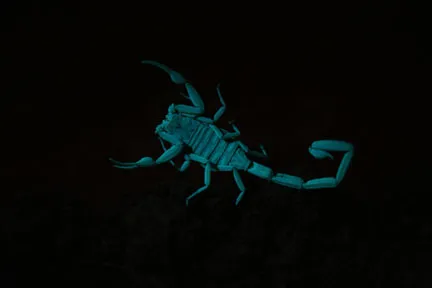
Photo: Balexan Bryce Alexander, Public domain, via Wikimedia Commons
An Animal That Commands Respect
On summer nights in the hills west of Asyut, the ground moves. Scorpions emerge from crevices in the limestone and from beneath loose stone, hunting insects and, incidentally, encountering people. Several species occur in the region, including the pale, slender deathstalker and the heavier black scorpions of the genus Androctonus, whose names are not ornamental. Both are medically significant, and both are common enough that rural households in Upper Egypt treat a scorpion in the doorway as an ordinary domestic problem rather than an exotic one.
That ordinary problem is also, from a pharmacological standpoint, an unusually rich one. Scorpion venom is a cocktail of small proteins and peptides refined by tens of millions of years of evolution to act on the nervous systems of predators and prey. A handful of those molecules have made their way into oncology and immunology laboratories in the United States and Europe. Understanding how requires looking at the animal, the chemistry, and the communities that live alongside both.
The Chemistry in the Telson
The business end of a scorpion is the telson, the bulb at the tip of the tail, which holds a pair of venom glands and a stinger. The venom itself contains hundreds of distinct compounds, most of them short peptide chains that bind with high specificity to ion channels — the protein gates that govern electrical signaling in nerve and muscle cells.
This is why scorpion venom interests drug developers. A molecule that latches onto one particular channel subtype and no other is a precision instrument, and precision is exactly what modern pharmacology struggles to manufacture. Among the best studied is chlorotoxin, a 36-amino-acid peptide first isolated from the deathstalker. It binds to a protein complex that is heavily expressed on the surface of glioma cells, the tumors that arise in the brain's supporting tissue.
That binding property has been exploited in the operating room. A fluorescent version of the peptide has been tested as a surgical aid, illuminating tumor margins that a surgeon's eye cannot distinguish from healthy tissue. Related compounds are under investigation for autoimmune and inflammatory conditions. None of this makes scorpion venom a medicine, and the gap between a laboratory finding and an approved drug is measured in years and failures. But the pipeline is real.
A Public-Health Burden in the Villages
Set against the promise is a duller, harder reality. Scorpion stings in Upper Egypt are a seasonal certainty, concentrated in the hot months when the animals are active and when families sleep outdoors or on rooftops. Most stings produce severe local pain and resolve; a minority, particularly in children and older adults, progress to cardiac and neurological complications that can be fatal without treatment.
Antivenom is the standard countermeasure, produced by immunizing horses with venom and harvesting the resulting antibodies. Egypt manufactures its own supply, and rural health units stock it, but distribution is uneven. Distance to a facility that holds antivenom, the availability of transport at night, and the cost of treatment all shape outcomes. Scorpion stings are, in this sense, a disease of geography as much as of biology.
Prevention work is unglamorous and effective: clearing rubble near dwellings, shaking out footwear, sealing gaps, and using light at doorways, since scorpions fluoresce under ultraviolet and can be spotted with a simple lamp. Community education programs in Upper Egypt have pushed these practices for years. They receive a fraction of the attention that a new drug candidate attracts.
Who Benefits, Who Is Studied
This is where the ethical questions sharpen. The raw material for venom research comes from animals collected in places like Asyut Governorate, in countries that often lack the laboratory infrastructure to develop a drug and the capital to fund clinical trials. The patents, the trials, and the eventual revenues are typically concentrated elsewhere.
The framework meant to address this is benefit-sharing, formalized internationally through protocols governing access to genetic resources. Egypt regulates the collection of wildlife, and researchers working legitimately do so under permits. But permits are not the same as partnership, and a collection agreement that produces no local scientific capacity, no royalties, and no returned expertise will reasonably be characterized as extraction by other means.
There are models that work better. Joint research programs that train Egyptian graduate students, share data openly, and name local institutions as co-investigators produce results that both sides can defend. Several Egyptian universities have built venom and toxin research capacity in recent years, and collaborations that route samples through those laboratories rather than around them tend to age better.
The Case for Careful Collection
There is a conservation angle as well. Scorpions are hardy and, in most habitats, abundant, but intensive collection for venom — which requires milking live animals, sometimes repeatedly — can stress local populations and is governed by animal welfare considerations that vary widely by jurisdiction. Synthetic production of identified peptides, which is now routine for molecules of this size, reduces the pressure to harvest wild animals once a compound of interest is characterized. That is the preferable trajectory.
For readers accustomed to thinking of desert wildlife as either scenery or hazard, Upper Egypt's scorpions resist both categories. They are a genuine clinical risk to specific communities, a resource whose value is realized almost entirely outside those communities, and a reminder that the line between a pest and a pharmaceutical is drawn by whoever holds the laboratory.
The responsible path is neither to romanticize the animal nor to regard its habitat as a warehouse. It is to fund the antivenom supply chain that keeps children alive tonight, build the research capacity that lets Egyptian scientists study their own fauna, and insist that the drugs eventually derived from these peptides carry some obligation back to the ground they came from.